A standard unit is one enclosed stall with a vented holding tank, a seat, and paper holders — no flush handle, no sink inside. That is the whole point: it is the cheapest reliable restroom you can legally put on a…
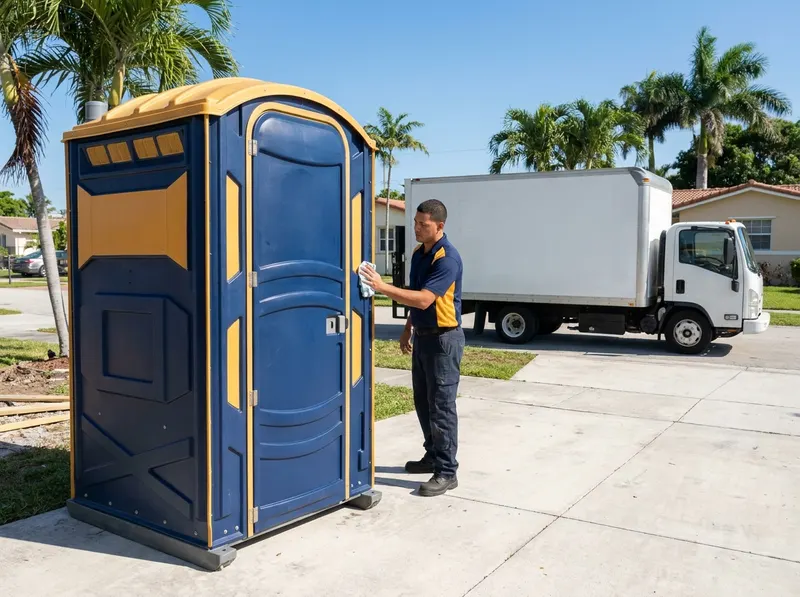
A standard unit is one enclosed stall with a vented holding tank, a seat, and paper holders — no flush handle, no sink inside. That is the whole point: it is the cheapest reliable restroom you can legally put on a Hialeah jobsite or in a side yard, and it is what a county inspector expects to see on an active build. For crews, the planning math is simple. One standard unit covers up to about 10 workers on a 40-hour week with weekly service. Push past that headcount, or run six-day weeks in July heat, and you either add a second unit or add a mid-week service visit. We will tell you which is cheaper for your job instead of guessing high.
Choose a standard unit when the users are working adults and the budget is tight — general contractors along the Palmetto industrial corridor near the Medley edge, roofing crews on Palm Springs and Hialeah Acres re-roofs, warehouse conversions in the Leah Arts District. Choose an upgrade when the crowd is dressed up or eating. For a quinceañera in Twin Lakes or a Country Club backyard graduation, guests notice the absence of a sink, so most hosts pair the standard unit with a portable hand-wash station or step up to a flushing unit. If wheelchair access is required, a standard unit does not satisfy it — an ADA unit is a wider, ground-level model and a separate line item. That is the trade-off in plain terms: standard saves real money and does the job, but it has no sink, no flush, and no wheelchair clearance.
Placement decides whether a delivery goes smooth in Hialeah. Our truck needs a clear straight-in approach and roughly 12 feet of overhead room, which matters on the narrow alleys behind East Hialeah duplexes and in fenced yards off West 4th Avenue. Tell us about locked gates, low carports, and swale drop-offs before the truck rolls — placement on a public right-of-way or swale can require permission from Miami-Dade County or the City, so confirm that before your drop date. Units set on a flat spot away from sprinkler heads stay cleaner and service faster. Events at Milander Park, Amelia Earhart Park, Bucky Dent Park or Goodlet Park usually have their own facility rules and load-in times, so we schedule around the park's window, not ours. Jobs near the Hialeah Park / Race Track district and the Hialeah Market Tri-Rail station often mean street-side placement and short unload windows, which is exactly why we commit to a window in writing.
Hurricane season changes the protocol from June through November. Standard units are tall and light, so we anchor or relocate them when a storm is named, and we will pull units off open sites in Westland Gardens or the industrial corridor rather than leave them to tip into a fence. Ask about the anchoring and pickup plan when you book a long-term rental — it costs less to plan it now than to replace a unit later.
On pricing, we quote the total: delivery, the service visits included in the term, and pickup. If a fee applies — extra pump-out, an after-hours drop, a relocation across the site — you hear the number before it happens. Every figure below is a ballpark for the Hialeah market; the exact price is confirmed on a free on-site visit or once you describe the address and access on the phone.
Every job gets a firm, written price after a free on-site visit.
Tell us about your standard portable toilet rental job in Hialeah and we'll send a clear, written quote — usually the same day.
 TrackPortaPotty Hub